ServicesSolar Panel Repair
Solar Panel Repair in Syracuse
If your solar production has slipped or the inverter is flashing a fault, we find out why and fix it. One person handles your call, the diagnosis and the repair, so you always know who to ask and what happens next.
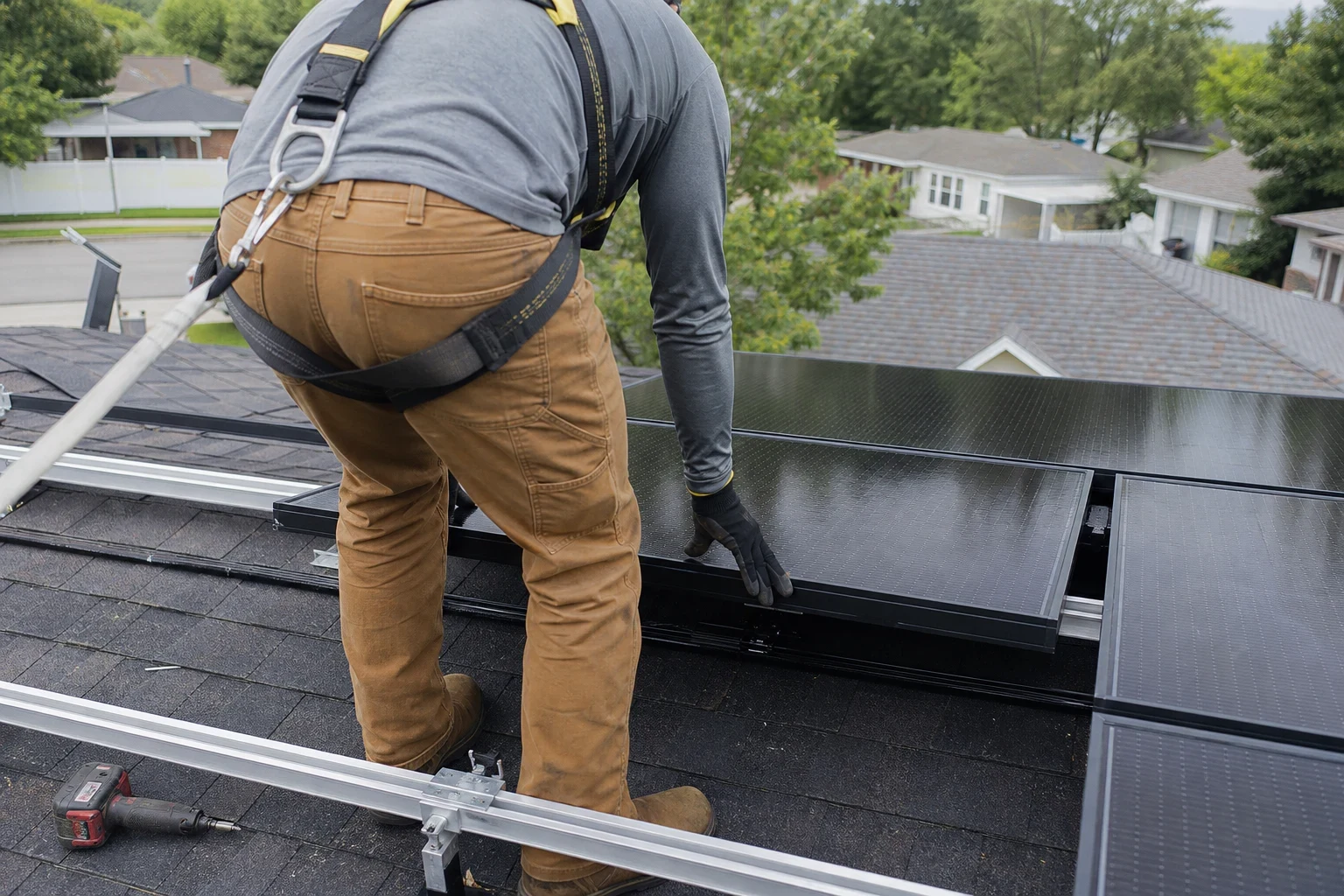
Getting your system back to full output
A solar system is mostly quiet, which means problems can hide for months. A single loose connector or a failing optimizer can pull down a whole string of panels, and you only notice when the power bill creeps back up. Our job is to find the real cause, not swap parts until the numbers look better.
From your first call to the final test, the same person stays with you. They explain what we found, what it will take to fix and whether a repair makes sense at all. Sometimes the honest answer is a simple reset or a firmware update, and we will tell you that.
What a repair visit covers
- Monitoring review
- We start with your production data. Comparing panel and string output usually points straight to where the trouble sits.
- Inverter and optimizer diagnosis
- Inverters and microinverters are the parts most likely to fail. We read the error codes, check voltages and confirm whether the unit or something feeding it is at fault.
- Wiring and connector checks
- We look for loose, corroded or chewed wiring and scorched connectors. Critters and years of freeze-thaw cycles are common culprits.
- Panel inspection
- We check for cracked glass, hot spots and storm damage. If a panel needs replacing, we look for a model that matches your system's electrical specs.
- Photos and a written estimate
- You get pictures of what we found and a line-item estimate before any repair begins. Nothing gets fixed until you say yes.
- Testing and cleanup
- After the fix, we confirm the system is producing again and pack out every scrap of old wiring and packaging.
Signs your solar system needs a repair
Production has dropped
Your app shows lower output than the same month last year, and the weather doesn't explain the gap.
Warning lights or fault codes
When the inverter's status light turns from green to amber or red, or your app sends a fault notice, a component has gone quiet or quit working.
The monitoring app went blank
Sometimes this is just Wi-Fi. Sometimes the inverter or gateway has failed, and the system may not be producing at all.
Visible damage after a storm
Hail and wind-blown debris can crack panel glass or knock wiring loose. After a strong spring storm, it is worth a look.
A breaker that keeps tripping
One trip can be a fluke. Repeated trips point to a wiring or equipment problem that needs a careful check.
How a repair job runs
- 1
Your phone call
Tell us what you are seeing and, if you can, share your monitoring data. Many problems can be narrowed down before anyone comes out, and we can set up a free virtual appointment if that helps.
- 2
On-site diagnosis
We test the inverter, wiring and panels outside your home and pin down the cause. Your contact walks you through what we found.
- 3
Clear options
You get photos and a written estimate. If replacement makes more sense than repair, we say so and explain why.
- 4
The repair
We order the right parts and schedule the work at a time that suits you. Most fixes take part of a day.
- 5
Test and wrap up
We confirm production in your app, clean up the work area and stay reachable if anything looks off in the weeks after.
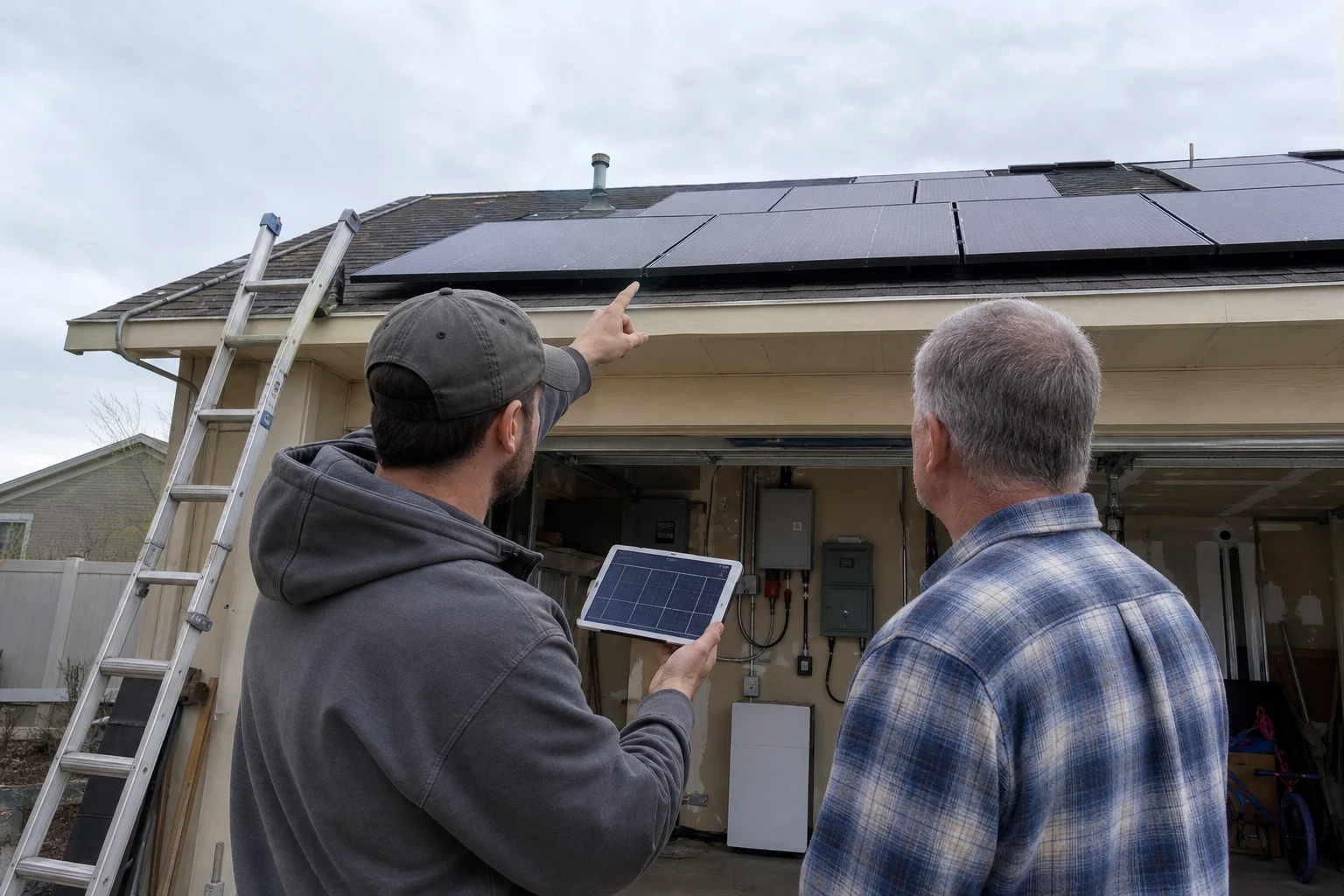
What affects the cost of a repair
Repair costs depend on what actually failed and how much of the system it touched. We will not quote a number before we know the cause. Once we do, you get a written estimate with each part and labor item listed.
- Which part failed
- A loose connector is a small fix. A failed string inverter or several microinverters is a bigger one.
- Manufacturer coverage
- Many inverters and panels carry their own product warranties. We check your paperwork so you are not paying for a part the manufacturer should replace.
- Matching replacement panels
- Older panel models can be hard to find. A close electrical match may take extra time to source.
- Access and layout
- Equipment that is easy to reach takes less time to work on than gear tucked behind fences or tight spaces.
- Permits
- Swapping like-for-like parts rarely needs one. Changing equipment size or wiring may, and we handle that paperwork if it applies.
Solar panel repair questions
Something not covered here? (801) 435-5838
Do you repair systems you didn't install?
Yes. We work on systems from other installers too. Bring whatever paperwork you have, and if you don't have any, we can usually identify the equipment on site.
Is my repair covered if you installed the system?
Our installation work comes with a lifetime warranty. If the problem traces back to how we put the system in, let us know and we will look at it under that warranty. Equipment failures may fall under the manufacturer's coverage instead, and we help you sort out which applies.
Can hail damage be claimed on my homeowners insurance?
Often it can, but that decision belongs to your insurer. We document the damage with photos and a written estimate you can share with your adjuster. We explain the process, but we don't act as your adjuster.
Should I turn my system off if something looks wrong?
If you see scorched wiring, smell burning or find a damaged panel, turn the system off at the shutoff switch and call us. For a simple drop in output or an app error, leave it running and let us look at the data first.
When is replacing better than repairing?
If a system is older, has several failing parts or uses equipment that is no longer made, replacement may cost less over time. We lay out both options so you can decide. If replacement is the right call, we can talk through solar panel installation or adding battery storage at the same time.
Get your system producing again
Describe what you're noticing, from a blank app to a lower bill, and we'll work out the next step with you. The same contact sees it through until your panels are back to full output.