ServicesSolar System Add-Ons
Solar System Add-Ons in Syracuse
Your power needs can change after the panels go up. A new EV, a finished basement or a heat pump can outgrow the system you have. We add what you need to your existing setup, and one person handles your questions from the first call through cleanup.
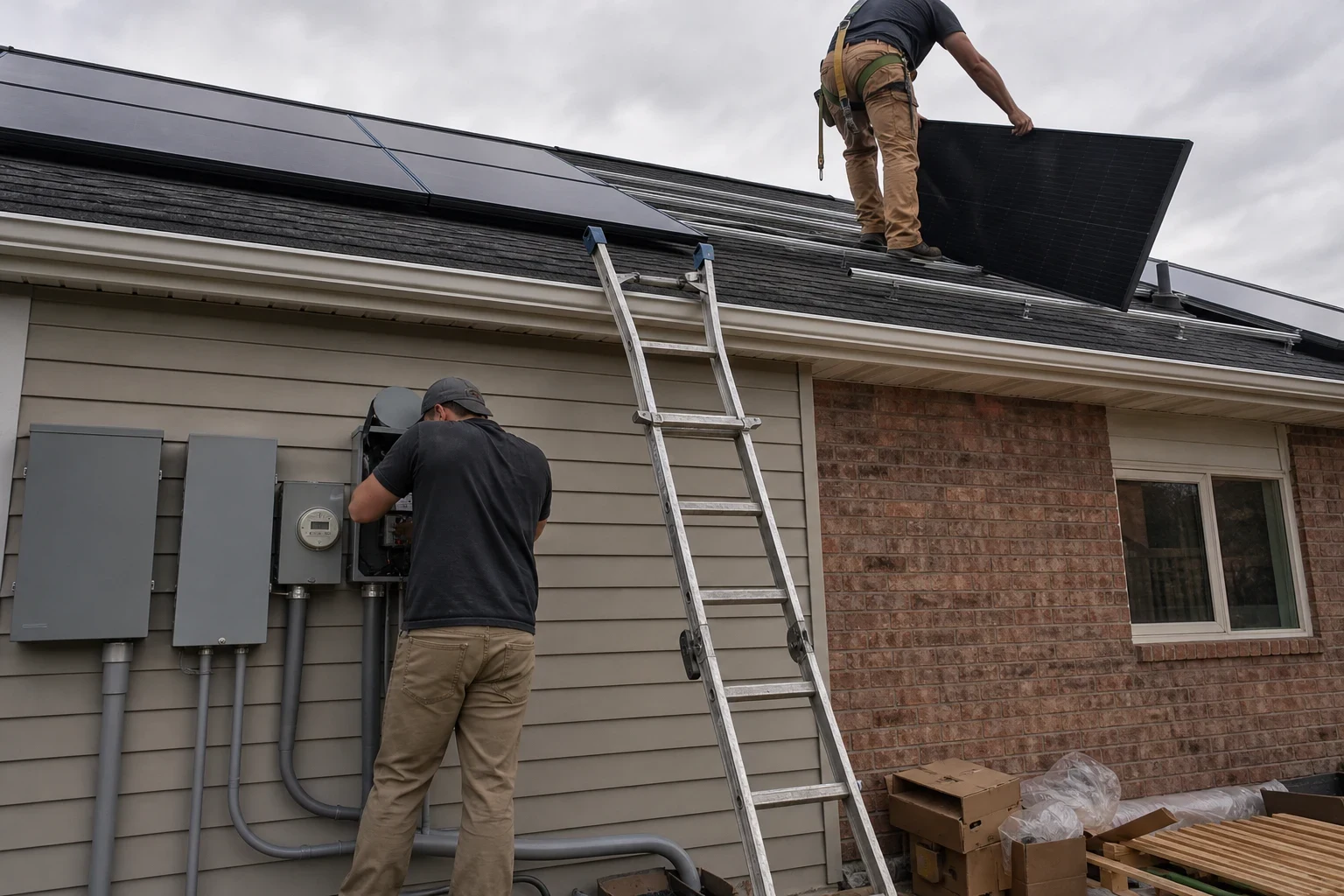
Growing a system you already own
Solar system add-ons are upgrades to a working solar setup: more panels, an EV charger circuit, better monitoring or electrical changes that let your system do more. They make sense when your power use has climbed since the original install, or when you want to see and control your production more closely.
Adding to an existing system is not the same as starting fresh. New panels have to fit the inverter's capacity, wiring has to be sized for the extra load, and your utility usually needs to approve the change before it goes live. We check all of that before we suggest anything, so you hear an honest answer about whether an add-on pays off or whether your current system already covers you.
You deal with one person the whole way. The same contact who reviews your system explains the options, schedules the crew and checks in after the work is done.
Add-ons we install
- Additional panels
- When your bills start creeping up again, we can grow your array to close the gap. We line up a year of usage against what your system produces now, then size the expansion to your inverter, or plan an inverter change if it is already maxed out.
- EV charger circuits
- A Level 2 charger needs its own circuit and space in your electrical panel. We handle both the charger and the wiring, so your daytime solar production can help pay for your charging.
- System monitoring
- A monitoring setup lets you check your solar output and your home's power use from your phone, broken down by the hour. If production dips, you see it right away instead of on next month's bill.
- Electrical panel upgrades
- Many older 100-amp panels simply run out of space once solar, a charger and a battery each need a breaker. We look at your panel and upgrade it when the add-ons you want require it.
- Smart load management
- Smart panels and load controllers let you choose which circuits come first when power is limited. They work especially well alongside battery storage, which we cover on our Battery Storage page.
Signs it's time to add on
Your bill is climbing again
If your utility charges are drifting back toward where they were before solar, your usage has likely outgrown your production. That is usually the clearest sign an expansion is worth a look.
You have a new electric vehicle
Charging at home can add a large share to your monthly use. Planning the charger and any extra panels together keeps you from buying grid power to fill the battery.
You added living space or appliances
A finished basement, a hot tub, a heat pump or a second fridge in the garage all raise demand. Utah summers already push air conditioning hard, and new loads stack on top of that.
You can't tell what your system is doing
If the only way you learn about production is your utility bill, slips in output can go unnoticed for months. Monitoring is a small add-on that fixes that.
Your breaker panel is full
No open slots or an undersized panel can block any new circuit. That usually needs to be sorted out before other add-ons go in.
What moves the cost of an add-on
Every add-on is priced from what your existing system and electrical setup can handle, so two homes asking for the same upgrade can land in different places. We go through each line of your estimate with you so nothing comes as a surprise. Options with $0 up front are available.
Inverter capacity
If your current inverter has room, adding panels is simpler. If not, it may need to be replaced or supplemented, which changes the scope.
Electrical panel condition
A panel with open slots and enough capacity keeps the job smaller. A full or undersized panel may need an upgrade first.
Distance and wiring runs
The farther a charger or new panels sit from your electrical panel, the more wire, conduit and labor the job takes.
Equipment you choose
Charger models, monitoring hardware and panel types vary in features. We explain the trade-offs and let you pick.
Permits and utility requirements
What the city and your utility require depends on the upgrade. We include those steps in your estimate.
How an add-on job runs
- 1
Free quote by phone
Tell us what you have and what has changed. We can walk through it in a free virtual appointment or set a time to see your system in person.
- 2
System and usage review
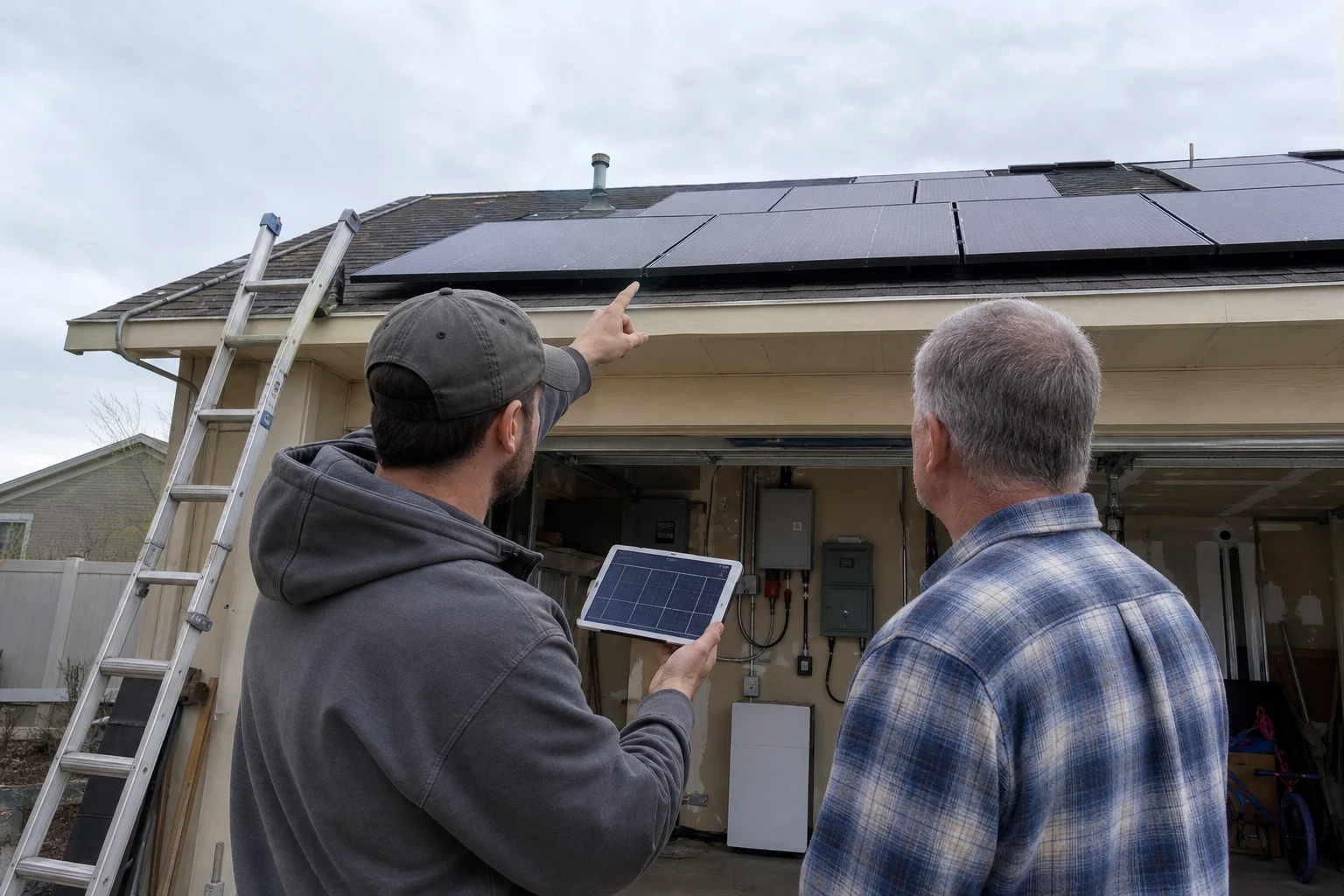
We look at your inverter, wiring, electrical panel and a year of utility bills. You get a written estimate that lists each item, and a plain answer if an add-on will not help.
- 3
Permits and utility approval
Most add-ons need an electrical permit, and panel expansions usually need updated interconnection approval from your utility. We file the paperwork and keep you posted on where it stands.
- 4
Installation day
The crew works outside and at your electrical panel. Power may be off for part of the day while we connect new equipment, and we tell you ahead of time when.
- 5
Inspection and walkthrough
After the inspector signs off, we turn everything on and show you how your new monitoring or charger works. Then we clear the work area before we leave.
Add-on questions homeowners ask us
Another company installed our panels years ago. Will you add to that system?
In most cases we can. We start by reviewing the existing equipment, the wiring and the original permit records to make sure anything new will work with what you already have. If that first install limits what can be added, we tell you plainly before you commit to anything.
Will the new panels look like the ones I already have?
Manufacturers update their panel models often, so an exact match is not always possible. What matters more is that the new panels suit your inverter and wiring. Before anything is ordered, we show you how the new and existing panels will look next to each other.
Do I need a battery to add an EV charger?
No. The charger runs off your home's regular electrical service, and your solar production offsets that use over the billing cycle. A battery is worth a look if you want to charge from stored solar at night or keep power on during an outage, and our Battery Storage page covers that.
Is the add-on installation covered by a warranty?
Yes. The installation work we do on your add-on is backed by our lifetime warranty on installation work. If your original equipment came from a different company, we go over those terms with you before the job starts.
How long does an add-on take from start to finish?
A charger or monitoring setup is often done in a single day on site, while a panel expansion may take a bit longer. Most of the waiting is for permits and utility approval. Your contact updates you at each step, so you always know what comes next.
Ready to get more from your solar?
Tell us what changed at your home and what you would like to add. You will talk with the same person from the first question to the final walkthrough, and we work with homeowners in Syracuse, Layton, Kaysville and nearby towns.